IB Physics HL online cohort
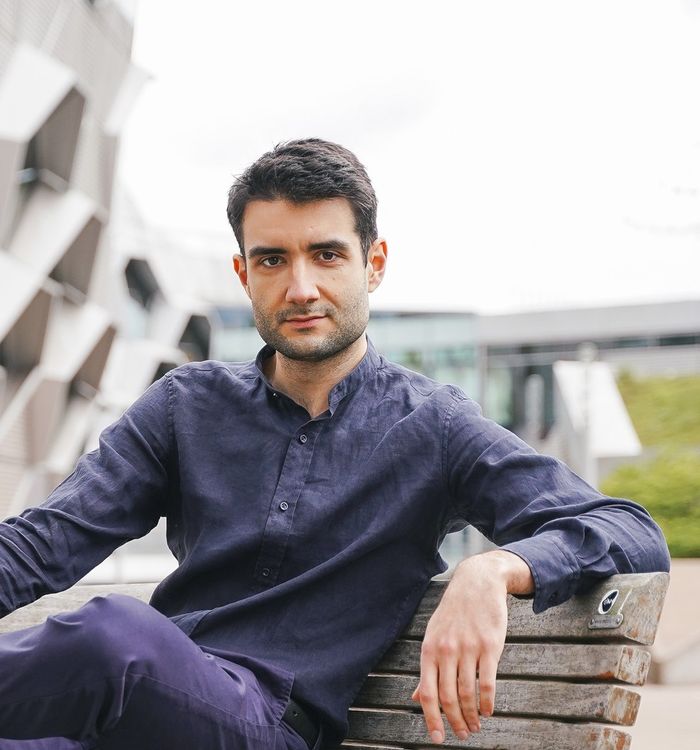
Twelve weeks of Higher Level physics for DP1 students, in a group of at most 8, taught by an aerospace engineer. Mondays 5–7 pm and Saturdays 10 am–12 pm, UK time, starting Monday 18 January 2027.
Who it is for
IB Physics HL students who want to reason from principles instead of matching questions to formulas. Sessions use diagrams, animations and live simulations so that the physics can be seen before it is calculated.
One parent wrote that her daughter "obtained maximum score in physics IB" after Bogdan's programme in Year 12.
The January cohort
For DP1 students (first year of the IB Diploma). At most 8 students, 4 hours of live teaching a week on Zoom for 12 weeks, starting Monday 18 January 2027.
4 of 8 places left · Applications close 11 January 2027
All times are UK time, live on Zoom, and every session is recorded and shared afterwards. The IB Maths AA HL cohort meets on Tuesdays and Sundays, so a student can join both.
What every student gets
- 4 hours of live teaching on Zoom each week for 12 weeks
- A recording of every session, shared afterwards
- Structured weekly problem sets
- A private cohort WhatsApp group for questions
- Fortnightly interactive problem-solving streams
- Up to 2 hours of optional 1-to-1 check-ins
How to join
- Book a free discovery callTalk through current studies, goals and learning needs.
- Try a short diagnostic challengeIt shows where the student is now, so the cohort fits.
- Receive an invitationSuitable students get an enrolment link for the cohort.
The 12 weeks: Part A
One topic every two weeks, with plenty of worked examples. The order may shift a little after the diagnostic challenges so it suits the group.
- Weeks 1–2A.1 Kinematics
Motion graphs, the equations of motion and projectiles.
- Weeks 3–4A.2 Forces and momentum
Newton's laws, circular motion, impulse and collisions.
- Weeks 5–6B.1 Thermal energy transfers
Temperature, specific heat capacity, phase changes, conduction and radiation.
- Weeks 7–8A.3 Work, energy and power
Energy conservation, power and efficiency.
- Weeks 9–10C.1 Simple harmonic motion
Oscillations, energy in SHM and phase.
- Weeks 11–12B.3 Gas laws
The ideal gas, moles and the kinetic model.
The whole course
Part A is the first of three 12-week parts which together cover the five themes of the current IB Physics syllabus, with the additional Higher Level content and the data-based questions of Paper 2.
Space, time and motion
Kinematics, forces and momentum, work, energy and power, rigid-body mechanics and relativity.
Particulate nature of matter
Thermal energy transfers, greenhouse effect, gas laws, thermodynamics and current and circuits.
Wave behaviour
Simple harmonic motion, wave models, wave phenomena, standing waves, resonance and the Doppler effect.
Fields
Gravitational, electric and magnetic fields, motion in electromagnetic fields and induction.
Nuclear and quantum physics
Atomic structure, quantum physics, radioactive decay, fission, fusion and stars.
Physics, explained so it stops being scary
Ioana took IB Physics and Maths with Bogdan before and during the IB, and finished with 40 points.
Ioana on physics. Ioana on IB Physics: complicated theory explained so simply it stopped being scary, and help reading through her maths and physics IAs.
What IB Physics parents and students say
Including the parent whose daughter reached the maximum score in IB Physics.
Fees and enrolment
4 of 8 places left · Applications close 11 January 2027
Pay weekly
- 4 hours of live teaching a week: £35 an hour, against £65 for 1-to-1
- 12 weekly payments, starting the day you enrol
Pay in full
- 48 hours of live teaching: £31.25 an hour
- Covers all 12 weeks
- Saves £180 against weekly payments
- Full refund if you withdraw during week 1
Before you pay: please book a free 15-minute discovery call first, so we can make sure it is the right fit and that the student is ready for it. Enrolment links are for students invited after their call and diagnostic challenge, and each cohort takes at most 8 students.
Refund policy. Full refund if you withdraw during week 1. No refunds after week 1.
Questions about the cohort
When are the sessions?
IB Maths AA HL: Tuesdays 5–7 pm and Sundays 10 am–12 pm, UK time. IB Physics HL: Mondays 5–7 pm and Saturdays 10 am–12 pm, UK time. All sessions are live on Zoom: the weekday session is the concept session and the weekend session is the problem tutorial, and the two cohorts never clash. Families outside the UK should convert from UK time: the UK is on GMT until 28 March 2027 and on BST after that.
Which year group is the January cohort for?
Students in the first year of the IB Diploma (DP1), who sit their final exams in May 2028. The topics follow the current IB guides: Mathematics: analysis and approaches (first assessment 2021) and Physics (first assessment 2025).
What if my child misses a session?
Every session is recorded and the recording is shared with the cohort afterwards, so nothing is lost. Questions can go in the cohort WhatsApp group at any time.
How do the sessions and the group work?
Sessions run on Zoom. Each cohort also has a private WhatsApp group for questions, announcements and the fortnightly problem-solving streams.
What does a student need?
A computer or tablet with Zoom, a webcam and microphone, a quiet space, paper and pen (or a tablet to write on), and for IB Maths the graphic display calculator they use at school.
What if a cohort turns out not to be the right fit?
A full refund is available if you withdraw during week 1. Students who need a different pace can also switch to 1-to-1 tutoring.
When do applications close?
11 January 2027, or earlier if the cohort fills. Each cohort takes at most 8 students. At the moment IB Maths AA HL has 3 of 8 places left and IB Physics HL has 4 of 8 places left.
Visualise the concepts
Average speed
If a car travels equal distances at 1, 2, 3 and 4 m/s, is its average speed ? The grey car says no. Watch the full solution on YouTube
Not sure which programme fits?
Book a free 15-minute discovery call. We talk through current grades, goals and the right next step.